Hosting Service Bifold Brochure: A Practical Guide to Format, Design, and Decision Making
In the competitive landscape of web hosting, the initial point of contact often determines whether a potential client proceeds with an inquiry or moves on to a competitor. While digital marketing dominates the modern conversation, physical collateral remains a vital component of a comprehensive business strategy for many service providers. The Hosting Service Bifold Brochure serves as a tangible bridge between complex technical offerings and the decision-making process of a prospective customer. This specific format offers a structured approach to presenting services, allowing businesses to convey credibility, detail, and professionalism in a single, folded sheet.
Understanding what makes this template distinct requires looking beyond the surface aesthetics. Unlike a standard flyer or a multi-page booklet, the bifold structure provides a controlled narrative flow. It forces the designer to prioritize information, ensuring that the most critical selling points—such as uptime guarantees, security features, and support availability—are presented first. For professionals aged 20 to 50 who are evaluating resources for their own hosting ventures or those of their clients, recognizing the strategic value of this document is essential.
Defining the Hosting Service Bifold Brochure Structure
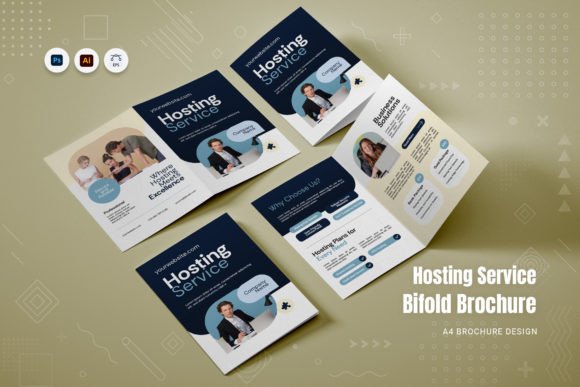
The Hosting Service Bifold Brochure is defined by its four-panel layout created when an A4 paper size sheet is folded in half. This creates two outer panels (the front cover and the back flap) and two inner panels (which unfold to reveal the full spread). This geometry dictates how information is consumed. The front cover acts as the hook, designed to grab attention immediately. The inside panels provide the depth required to explain technical specifications, while the back panel typically houses contact information and calls to action.
What distinguishes this specific template from generic designs is its adaptability and professional-grade construction. High-quality versions of these templates are built with specific technical requirements in mind. They are typically prepared in CMYK color mode at 300 DPI, ensuring that when printed, the colors remain vibrant and text remains sharp. The inclusion of bleed areas ensures that no white edges appear after trimming, a common pitfall in amateur printing jobs. Furthermore, the organization of layers within design software like Adobe Illustrator or InDesign allows for rapid customization without compromising the structural integrity of the layout.
For a hosting company, the content density is a key factor. A bifold brochure must balance brevity with completeness. It cannot be as exhaustive as a white paper, yet it must be more detailed than a business card. The distinct advantage lies in its ability to segment information logically. One panel can focus on shared hosting solutions, another on VPS or dedicated servers, while the third highlights managed services. This segmentation helps the reader navigate complex options without feeling overwhelmed.
Comparing Formats: Bifold vs. Alternatives
When selecting a marketing tool, it is necessary to compare the Hosting Service Bifold Brochure against other common formats. Each option carries different tradeoffs regarding cost, information capacity, and user engagement.
- Trifold Brochures: A trifold offers six panels, providing double the space of a bifold. While this allows for more detailed feature lists, it can also lead to information overload. For a hosting service where clarity is paramount, the bifold's concise nature often yields better retention rates. However, if the provider offers a vast array of niche products, a trifold might be more appropriate.
- Digital PDFs: Digital brochures are cost-effective and easily distributed via email. Yet, they lack the tactile presence of a printed piece. In face-to-face meetings, such as conferences or local business networking events, a physical bifold brochure commands more attention and stays on a desk longer than a file buried in an inbox.
- Flyers: Single-sheet flyers are inexpensive but often perceived as disposable. They rarely convey the level of trust required for a service involving data security and server reliability. The bifold format, by virtue of its folding mechanism, implies a higher degree of preparation and professionalism.
The choice between these formats depends heavily on the distribution channel. If the primary goal is mass distribution through direct mail, the cost efficiency of a flyer might be tempting. However, for targeted sales efforts where the goal is to establish authority and trust, the Hosting Service Bifold Brochure offers a superior return on investment due to its perceived value and structured presentation.
Evaluating Strengths and Tradeoffs
Every design solution comes with inherent strengths and limitations. The primary strength of the bifold template is its ease of use and customization. Modern templates are fully layered and well-organized, meaning that even users with intermediate design skills can modify elements, swap images, and update pricing tables without needing to start from scratch. The use of built-in free fonts ensures that the final product looks consistent across different devices and printers, avoiding licensing issues that can arise with proprietary typefaces.
Another significant advantage is the "print-ready" status of high-quality templates. With bleed included and dimensions set to standard A4 sizes, the risk of production errors is minimized. This is crucial for small hosting startups that may not have access to a dedicated print department. The ability to generate a professional-looking document quickly allows these businesses to compete visually with larger, established firms.
However, there are tradeoffs to consider. The limited real estate of a bifold brochure means that every word counts. There is no room for verbose explanations or extensive case studies. If a hosting provider relies heavily on long-form storytelling to sell their unique methodology, this format may feel restrictive. Additionally, while the template is easy to edit, it still requires a basic understanding of design principles. Poor image choices or cluttered layouts can undermine the professional aesthetic the template aims to provide.
Furthermore, the static nature of print media means that updates require re-printing. In the fast-moving world of web hosting, where pricing models and technology stacks change frequently, a printed brochure can become outdated quickly. This necessitates a hybrid approach, where the physical brochure directs readers to a dynamic QR code or URL for the most current information.
Decision Factors: When to Choose a Bifold Brochure
Determining when the Hosting Service Bifold Brochure is the right choice involves analyzing the specific goals of the marketing campaign and the target audience. This format is particularly effective in scenarios where personal interaction plays a role. For instance, during industry trade shows, networking events, or local chamber of commerce meetings, handing over a substantial, well-designed bifold brochure leaves a lasting impression.
It is also the ideal choice for educational purposes. Because the layout is clean and modern, it works well for explaining tiered service levels. A visual comparison of "Basic," "Pro," and "Enterprise" hosting plans fits naturally into the three-column or split-panel layouts often found in these templates. The structured environment helps the reader understand the differences between packages without getting lost in jargon.
Conversely, there are situations where this option may not be the best fit. If the budget is extremely tight and the volume of distribution needs to be massive, a simple flyer or purely digital assets might be more practical. Similarly, if the target demographic consists entirely of tech-savvy developers who prefer reading documentation online rather than holding printed materials, investing in high-end print collateral might yield a lower conversion rate compared to optimizing a landing page.
Another decision factor is the complexity of the brand identity. If a hosting company has a highly abstract or avant-garde brand voice, the structured nature of a standard bifold template might feel too rigid. In such cases, a custom-designed, non-standard fold might be necessary to align with the brand's unique personality. However, for the majority of businesses aiming for a clean, trustworthy, and professional image, the standard bifold remains a robust solution.
Implementation and Customization Strategies
To maximize the effectiveness of a Hosting Service Bifold Brochure, customization should go beyond simply swapping logos. The content must be tailored to address the specific pain points of the target audience. For example, if the primary market is e-commerce businesses, the brochure should highlight SSL certificates, PCI compliance, and speed optimization. If the target is bloggers, the focus should shift to ease of use, one-click installations, and backup solutions.
Visual hierarchy is critical in this format. Using paragraph styles and image placeholders effectively ensures that the eye is guided through the document in a logical sequence. Strong headings should break up text blocks, making the document skimmable—a necessity in today's fast-paced environment. The use of high-resolution images that reflect the modern, secure, and reliable nature of the hosting service reinforces the message.
Finally, maintaining consistency across all touchpoints is key. The fonts, colors, and tone used in the bifold brochure should mirror the website and other marketing materials. This cohesive branding builds trust and recognition. By leveraging the organized files and layers provided in professional templates, businesses can ensure that their visual identity remains consistent, even as they iterate on their messaging over time.
In conclusion, the Hosting Service Bifold Brochure represents a balanced approach to marketing communication. It offers the depth needed to explain complex services while maintaining the conciseness required for quick consumption. While it is not a silver bullet for every marketing challenge, its strengths in professionalism, structure, and ease of customization make it a valuable asset for hosting providers looking to differentiate themselves in a crowded market. By carefully weighing the format against alternatives and tailoring the content to specific audience needs, businesses can create a powerful tool that drives engagement and fosters trust.