Mastering the Islamic Arabic 3D Text Effect for Professional Design
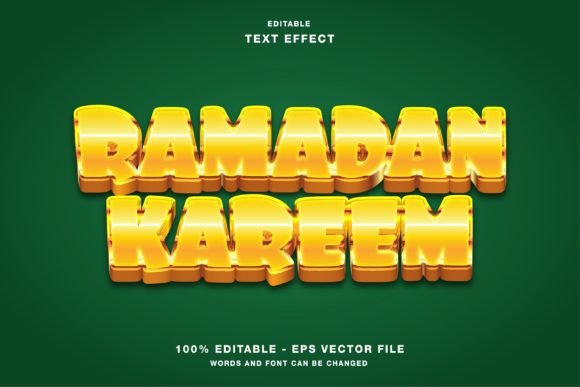
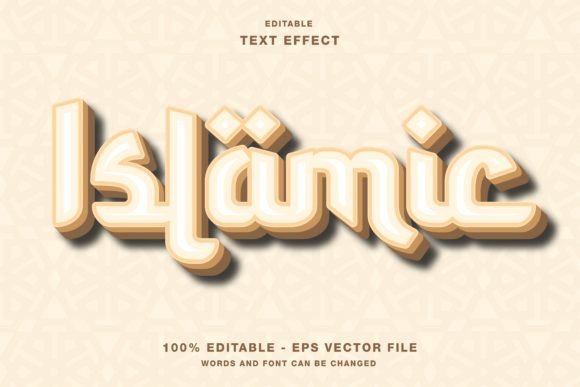
In the realm of digital and print design, typography serves as the backbone of visual communication. When the subject matter involves culture, spirituality, or heritage, standard fonts often fail to capture the depth and reverence required. This is where the Islamic Arabic 3D Text Effect becomes an indispensable tool for designers. Unlike flat, two-dimensional typefaces, this effect adds volume, texture, and a sense of grandeur that resonates with the rich artistic traditions of Islamic calligraphy. For professionals looking to elevate their projects, understanding how to leverage this specific editable template in Adobe Illustrator can transform a simple message into a powerful visual statement.
Understanding the Value of Dimensional Typography
The Islamic Arabic 3D Text Effect is not merely a decorative font; it is a comprehensive design system built within vector software. At its core, this resource allows users to create text that appears to have physical presence, casting shadows, reflecting light, and interacting with its environment. The integration of 3D elements with traditional Arabic script creates a dynamic contrast between ancient artistry and modern digital techniques. This fusion is particularly effective because it respects the fluidity and elegance of Arabic calligraphy while adding a contemporary edge suitable for today's fast-paced media landscape.
For many designers, the challenge lies in creating these complex effects from scratch. Building realistic lighting, bevels, and textures requires advanced knowledge of extrusion tools, gradient meshes, and layer blending modes. Without a robust starting point, the process can be time-consuming and technically demanding. The goal for most users is not just to make text look "cool," but to ensure the design communicates authority, beauty, and cultural significance instantly. This is precisely where a pre-constructed, editable template solves the immediate problem of efficiency without sacrificing quality.
Solving Common Design Challenges
Designers frequently encounter specific hurdles when working on projects that require high-impact Arabic typography. One common issue is the lack of versatility. A static image file cannot be easily repurposed for different campaigns or adjusted for various color schemes. Another significant challenge is scalability. Raster images often lose quality when resized for large-format printing, such as billboards or event banners, whereas vector-based solutions maintain crisp edges at any size.
The Islamic Arabic 3D Text Effect addresses these pain points directly by offering a fully editable structure. Because the template is designed for Adobe Illustrator, every element—from the stroke weight to the 3D extrusion settings—is accessible. This means you are not locked into a single color palette or text string. If a client requests a change in the wording or a shift in the color mode to match a brand identity, the template adapts immediately. This flexibility is crucial for agencies and freelancers who need to deliver rapid revisions without compromising the integrity of the design.
Practical Applications Across Media Platforms
The utility of this text effect extends far beyond a single medium. Its RGB color mode makes it perfectly suited for digital environments where vibrant colors and high contrast are necessary to grab attention. Consider the following practical applications where this effect excels:
- Social Media Promotions: Platforms like Instagram, Twitter, and Facebook rely heavily on visual hooks. An Islamic Arabic 3D Text Effect headline can stop a user mid-scroll. Whether promoting a religious event, a cultural festival, or a community initiative, the three-dimensional aspect ensures the text stands out against busy feeds.
- Web Design Headlines: On websites, clarity and impact are paramount. Using this effect for hero sections or section headers can guide the user's eye and establish a thematic tone immediately. The vector nature ensures the text loads quickly and renders sharply on all devices.
- Print Publications: For magazines, flyers, and posters, the depth provided by the 3D effect adds a tactile quality that flat text lacks. Even though the source file is RGB, it can be converted to CMYK for professional printing, ensuring that the final output retains its dimensional feel on paper.
- Event Materials: From conference programs to wedding invitations, the ability to customize the text allows for personalization. You can easily insert names, dates, or specific messages while maintaining a cohesive, high-end aesthetic.
Customization and Workflow Efficiency
One of the most significant advantages of this template is its editability. Many resources available online are flattened JPEGs or non-editable EPS files that limit creativity. In contrast, this Islamic Arabic 3D Text Effect provides access to the underlying layers. Users can modify the text content using the Type tool, adjust the 3D parameters to change the angle of view, and alter the surface materials to simulate gold, marble, or metallic finishes.
This level of control empowers different types of users to approach their projects uniquely. A graphic designer might focus on fine-tuning the gradients and shadows to achieve photorealism. A marketing manager might prioritize speed, simply swapping out the text to match a new campaign slogan. Meanwhile, a web developer could export the assets in optimized formats for seamless integration into a website layout. The inclusion of both EPS and JPG files in the main folder ensures that there is a suitable format for every stage of the production pipeline, from initial concept to final delivery.
Strategic Implementation for Maximum Impact
To get the most out of the Islamic Arabic 3D Text Effect, it is important to consider the context in which it will be used. While the effect is striking, it should not overwhelm the supporting content. Balance is key. When using this effect for social media, pair it with clean backgrounds that allow the text to pop. For print materials, ensure that the resolution and color profiles are correctly set before sending to the printer.
Furthermore, consider the emotional resonance of the design. The choice of color and texture can significantly influence how the message is received. Warm tones like gold and deep reds often convey tradition and celebration, while cooler metallic shades might suggest modernity and innovation. By experimenting with the customizable elements of the template, you can tailor the mood to fit your specific audience and objectives.
Conclusion
The demand for high-quality, culturally relevant design resources continues to grow. The Islamic Arabic 3D Text Effect offers a sophisticated solution that bridges the gap between traditional calligraphy and modern graphic design needs. By providing a flexible, editable, and visually stunning template, it empowers creators to produce professional-grade work efficiently. Whether you are designing a flyer for a local event, a banner for a magazine, or a promotional post for social media, this tool provides the foundation for impactful communication. Embracing such versatile resources allows designers to focus less on technical construction and more on creative storytelling, ultimately delivering results that resonate deeply with their audience.